



Detect Manufacturing Defects Before They Reach the Customer
Sphere's Manufacturing Anomaly Detection solution embeds TinyML AI directly into production line equipment and quality inspection systems – detecting defects, equipment faults, and process deviations in real time, at the machine, without cloud round-trips. Average defect escape rate reduction: 78%.
Organizations around the world trust us


Why This Matters Now
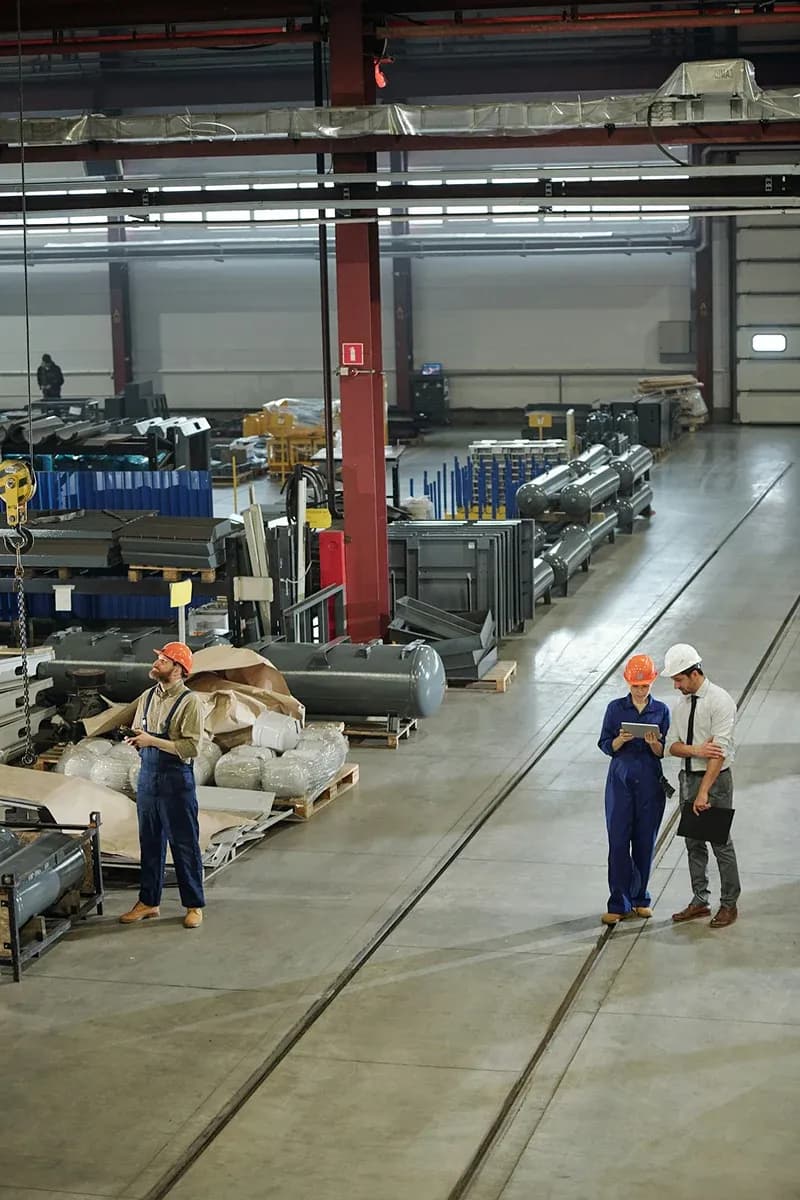
Manufacturing quality problems are expensive: the average cost of a product recall exceeds $10M, warranty claims erode 2–3% of revenue annually, and unplanned equipment downtime costs $260K per hour. Traditional statistical process control (SPC) catches problems after they've already produced defective product – and scheduled maintenance replaces parts that are still good while missing failures happening between scheduled intervals.
1. SPC Is Reactive, Not Predictive
Statistical process control catches process drift only after defective product has been made. AI-powered continuous monitoring catches the signals 4–72 hours before the defect emerges.
2. Scheduled Maintenance Misses Real Failures
Replacing parts on a fixed schedule means replacing 60–70% of still-good components while missing the 20% that are degrading rapidly between intervals.
3. Visual Inspection Is Inconsistent
Human visual inspection misses 15–20% of defects due to fatigue, attention variation, and subjectivity. Camera-based AI inspection achieves 99%+ consistency.
What Sphere Delivers
Sphere's TinyML manufacturing solution embeds trained anomaly detection models directly into PLCs, edge gateways, and camera modules on the production line – providing real-time process monitoring, equipment health assessment, and visual inspection without any cloud dependency. Models are trained on your specific production data to maximize accuracy for your product and process.
Production Process Anomaly Detection
Vibration, temperature, current, and pressure sensors feed TinyML models that detect process deviations – catching defect precursors before scrap is produced.
Machine Vision Quality Inspection
Embedded vision models on camera modules inspect 100% of production output at line speed – detecting dimensional defects, surface anomalies, and assembly errors.
Equipment Health Monitoring
Continuous vibration and acoustic analysis on motors, conveyors, and rotating equipment – predicting bearing failures, belt wear, and lubrication issues days in advance.
MES/SCADA Integration
Anomaly signals integrate directly with your Manufacturing Execution System – triggering operator alerts, automatic line stops, and maintenance work orders.
Model Continuous Improvement
New defect types and process variations are used to continuously retrain and improve models – with Sphere managing the retraining pipeline and model deployment.
Edge Deployment
Run anomaly detection and inspection models directly on production equipment where decisions need to happen in milliseconds. Sphere deploys TinyML models to PLC-connected devices, edge gateways, and vision hardware.
Built On Industry-Leading Technology
Sphere's manufacturing TinyML stack is built for real-time inference on production equipment, embedded sensors, and industrial vision hardware. The architecture combines lightweight edge ML frameworks, industrial integration protocols, cloud retraining services, and hybrid edge-cloud orchestration so manufacturers can move from raw machine data and visual inputs to live anomaly detection, inspection, and equipment intelligence on the line.
We'd love to hear from you!
Please provide your contact details, and our team will get back to you promptly.
Who This Is For
Weld quality inspection, component dimensional verification, and paint defect detection on automated assembly lines.
PCB defect inspection, solder joint quality, and component placement verification at speeds exceeding human inspection capability.
Foreign object detection, fill level inspection, and packaging integrity verification for FDA compliance.
Tablet defect detection, blister pack integrity, and packaging label verification for GMP compliance.
Surface defect detection on castings, machined parts, and stamped metal components.
Get a Free Manufacturing AI Assessment
Sphere's manufacturing AI engineers will visit your facility, review your top 3 quality and maintenance challenges, and propose a TinyML-based solution with projected ROI – at no cost.
How It Works
Process Mapping
Map production processes, identify quality failure modes, and define inspection checkpoints and sensor placements.
Data Collection
Deploy data collection hardware at inspection points. Collect labeled samples of normal and defective conditions.
Model Training
Train anomaly detection and classification models on collected data. Validate accuracy on held-out test samples.
Edge Deployment
Deploy optimized models to edge hardware. Integrate with MES/SCADA via OPC-UA or MQTT. Run parallel operation for 2 weeks to validate accuracy.
Process Mapping
Map production processes, identify quality failure modes, and define inspection checkpoints and sensor placements.
Data Collection
Deploy data collection hardware at inspection points. Collect labeled samples of normal and defective conditions.
Model Training
Train anomaly detection and classification models on collected data. Validate accuracy on held-out test samples.
Edge Deployment
Deploy optimized models to edge hardware. Integrate with MES/SCADA via OPC-UA or MQTT. Run parallel operation for 2 weeks to validate accuracy.

ROI & Business Impact
Defect Reduction & Warranty Savings
Sphere manufacturing clients achieve average defect escape rate reductions of 78%, warranty claim reductions of $400K–$1.5M annually, and unplanned downtime reductions of 40–65% from predictive maintenance.
Payback in 5–8 Months
Full ROI is typically achieved within 5–8 months of go-live.
Hear from
our clientsHear from our clients

Lee Ebreo
VP of Engineering at Credit Ninja
These things would not have been achievable if we did not build our own in-house system and if we did not partner with Sphere to help us achieve our goals.

Selah Ben-Haim
VP of Engineering at Prominence Advisors
Our experience with Sphere and their team has been and continues to be fantastic. We keep throwing new projects at them, and they keep knocking them out of the park (including the rescue of a project that was previously bungled by another vendor).

Ben Crawford
Senior Product Manager at Enova Financial
I would expect to be delighted. It's been a really positive experience, working with Sphere, and I would expect you to have the same.

Mark Friedgan
CEO at CreditNinja
Sphere consistently prioritizes the needs of their clients, demonstrating both agility and teamwork. As an offshore team, they have been an integral part of our organization and we plan to continue growing with them.

René Pfitzner
Co-Founder at Experify
Sphere provided excellent full-stack development manpower to augment our team and help push our product forward. They are easy to work with, tech-savvy and proactive.

Bruce Burdick
Chief Information Officer at Integra Credit
We've been working with Sphere and its excellent consultants since our founding. I've found that they are true partners in the success of our business.

Jemal Swoboda
CEO at Dabble
The resources and developers that Sphere Software provides are skilled and have the required technical expertise, but more importantly, they have helped us build a culture of excellence within our team.

Arthur Tretyak
Founder and CEO at IntegraCredit
With Sphere, we were able to migrate in half the time it would take to train an additional FTE… and for a fraction of the cost. Our experience with Sphere has been exceptional.
Lee Ebreo
VP of Engineering at Credit Ninja
These things would not have been achievable if we did not build our own in-house system and if we did not partner with Sphere to help us achieve our goals.
Selah Ben-Haim
VP of Engineering at Prominence Advisors
Our experience with Sphere and their team has been and continues to be fantastic. We keep throwing new projects at them, and they keep knocking them out of the park (including the rescue of a project that was previously bungled by another vendor).

TOP AI CODE GENERATION COMPANY UNITED STATES 2025

TOP AI TEXT GENERATION COMPANY FLORIDA 2025

TOP APP DEVELOPMENT COMPANY MANUFACTURING 2025

TOP ARTIFICIAL INTELLIGENCE COMPANY UNITED STATES 2025

TOP CHATBOT COMPANY UNITED STATES 2025

TOP RECOMMENDATION SYSTEMS COMPANY UNITED STATES 2025

GLOBAL RECOGNITION AWARDS 2026

BEST IN AI FOR DOCUMENTATION VALIDATION 2026

BEST IN AI POWERED INVOICE AUDITING 2026

GLOBAL TECH WINNER 2026
MOST INNOVATIVE TECHNOLOGY CONSULTING FIRM 2026
GLOBAL GENERATIVE AI AWARD 2026 WINNER
Join 300+
Satisfied Clients
0
Years of Excellence
0+
Projects Delivered
0
Countries
Globally diverse, community-focused
0+
Clients
top 20 average 8+ years