

A 120-employee Texas general contractor deployed SphereIQ in under two weeks, connected 8 systems, and recovered 500+ hours per month — $450K in annual productivity value.

Industrial IoT Architecture Explained: How Smart Factories Are Actually Built
Industrial IoT is a $276 billion market growing at 13%+ annually — but only for companies that get the architecture right. This article walks through all eight layers of the IIoT stack, explains what each one does, and shows where most implementations go wrong.

The Complete OpenClaw Setup & Installation Guide
OpenClaw turns AI from something you talk to into something that actually works for you. It runs continuously, connects to your tools, and executes real tasks across your systems. This guide breaks down what matters: which tools to enable, which risks to control, and how to configure an agent that delivers value without turning into a liability.

Staff Augmentation Evolved: Three Strategic Models to Navigate the AI Era and Market Uncertainty
Hiring freeze, but your product roadmap hasn't shrunk? You're not alone. Many CTOs and product leaders in 2026 face

Underwriting Automation with AWS Bedrock: Why Deterministic Control Beats Autonomous AI
How AWS Step Functions and Amazon Bedrock together create audit-grade, high-velocity underwriting pipelines that reduce costs by up to
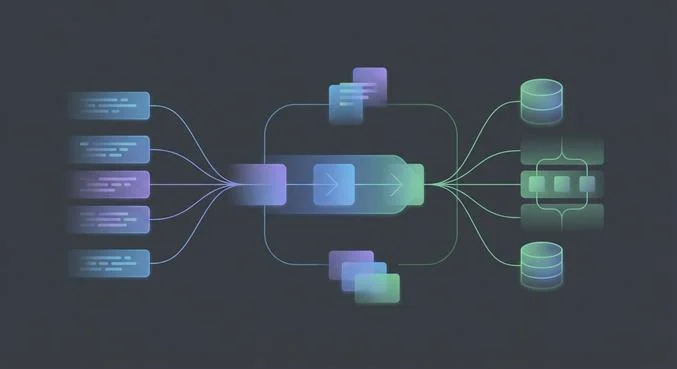
Building a Payment Reconciliation Agent on AWS: Architecture Walkthrough
Why the best reconciliation systems treat mismatches as explicit state transitions – not inference problems – and how AWS

Enterprise AI Agents in 2026: The Maturity Map
Enterprise AI agents are scaling fast, but most organizations are not ready for full autonomy. This guide breaks down the five levels of the Agentic AI Maturity Pyramid – from chatbots to autonomous systems – and explains how to move from experimentation to production without losing trust, control, or ROI clarity.
The Rise of Physical AI: What Actually Works and What You Need to Know
Physical Intelligence raised $600 million at a $5.6 billion valuation for software that acts as a universal brain for robots. The hype is real, but so is the gap between lab demos and production reality. We break down what actually works in Physical AI today, the three hard problems nobody's solving yet, and why investors are betting billions on robot brains instead of robot bodies.


LLM Observability: Jagged AI, Real Economics, and the Work of Making It Real
LLMs aren’t “bad” or “overhyped” – they’re jagged: impressive on benchmarks, brittle in real workflows. This article explains why that gap shows up as real cost in production, and why LLM observability is the foundation for turning capability into predictable throughput. You’ll see how observability, evaluation-driven development, guardrails, RAG, and agentic checkpoints work together to make GenAI reliable, governable, and worth scaling.


AI-Powered Legacy System Modernization: Turning the Ceiling into a Launchpad
Healthcare and life sciences organizations reach a turning point where legacy infrastructure, siloed workflows, and fragmented data can no longer support the pace of change. True transformation comes from strengthening the foundation: modernizing core systems, building integrated architectures, and aligning people around a clear strategy. Companies that invest in clarity, robust infrastructure, and disciplined execution unlock sustainable innovation and long-term resilience — without silos, shortcuts, or wasted momentum.